Inverted Piston Espresso
A maximally compact method of producing true 9 bar espresso
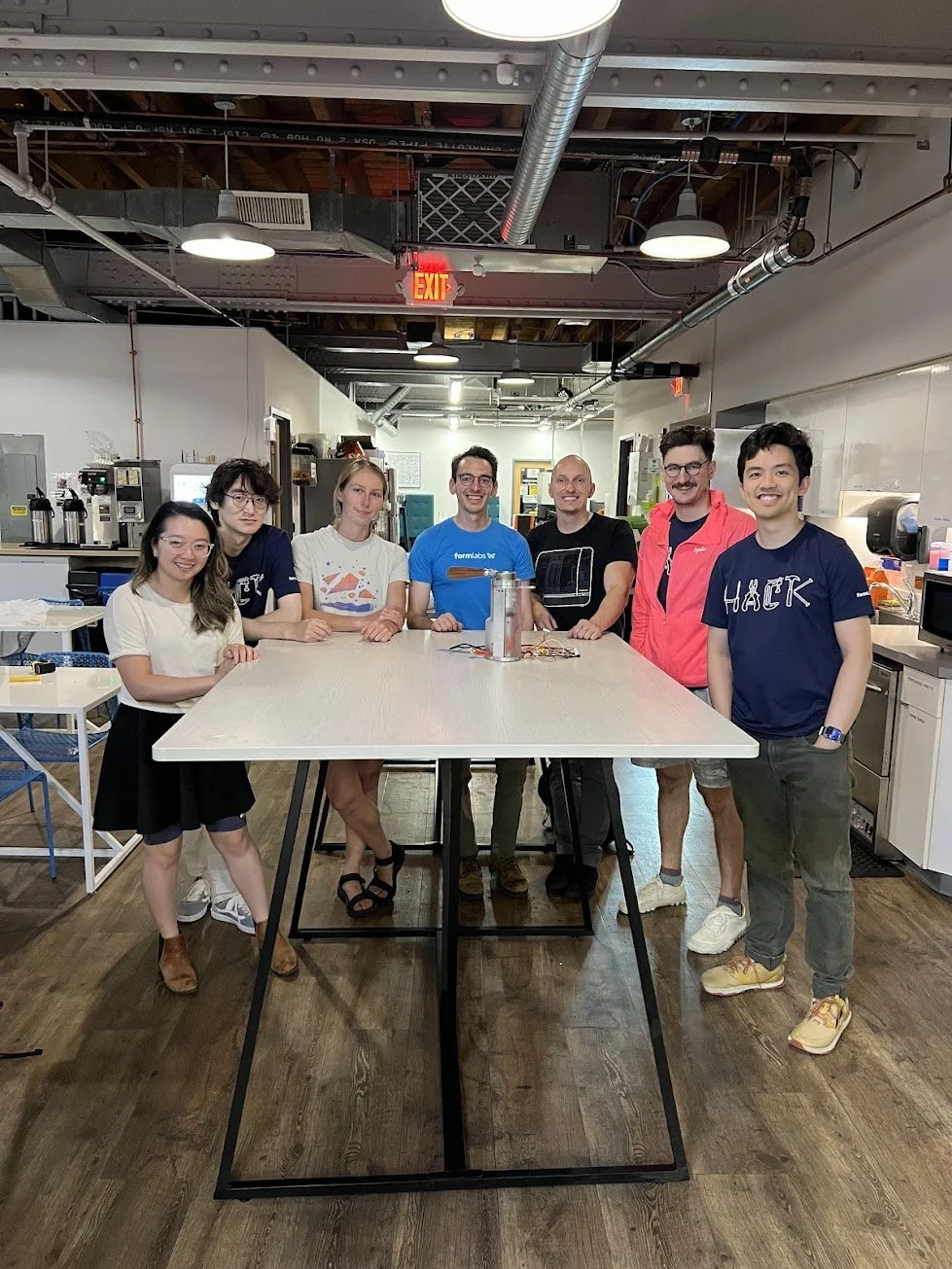
Designed and build during a 2024 hackathon by:
Mechanical Team: Myself, Vince Thornberg, Lock Moore, Luke Arnone
Electrical and Integration: Hannah Bartoshesky, Tony Wu, Kirsty Chau
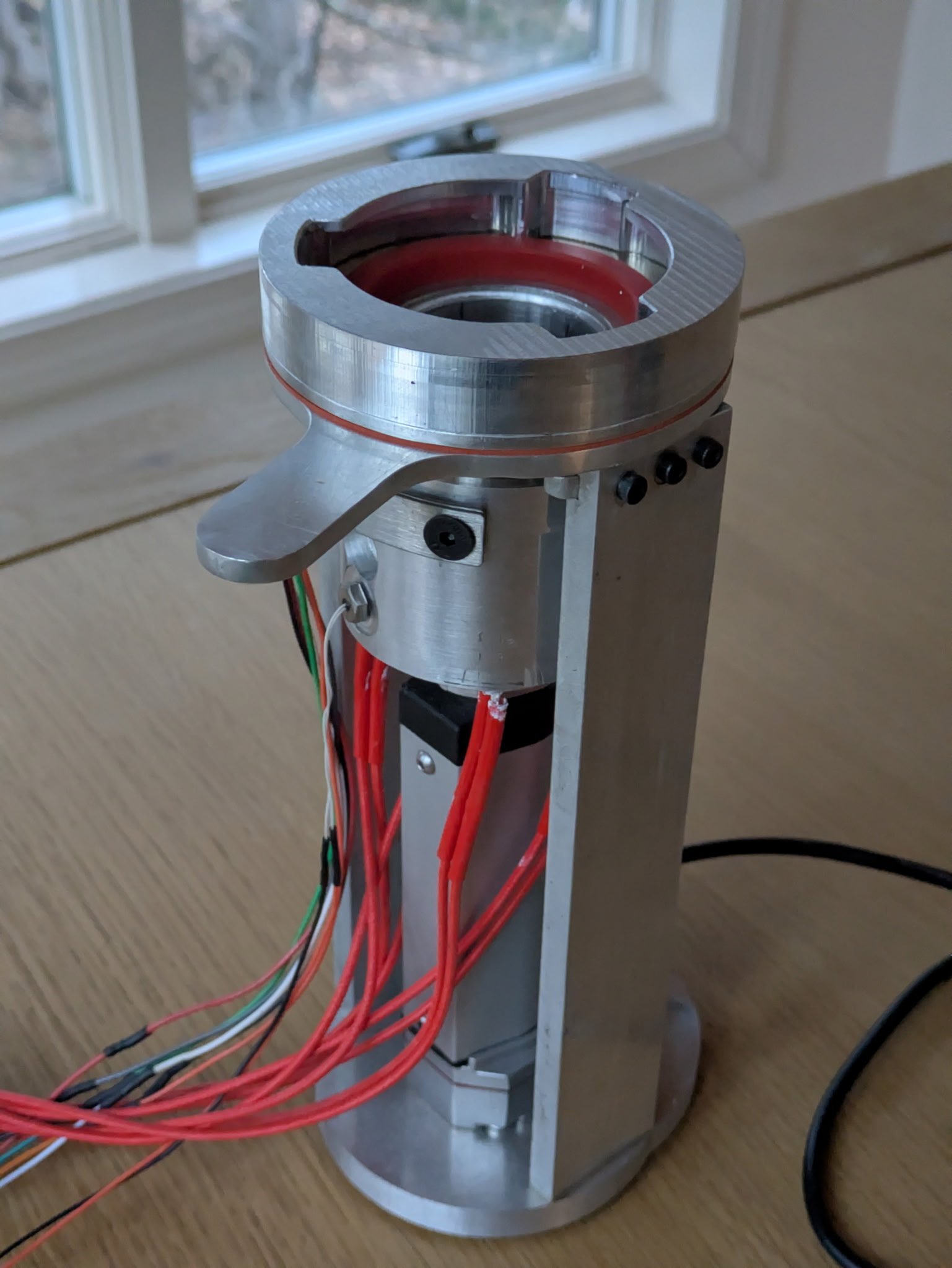
Overview
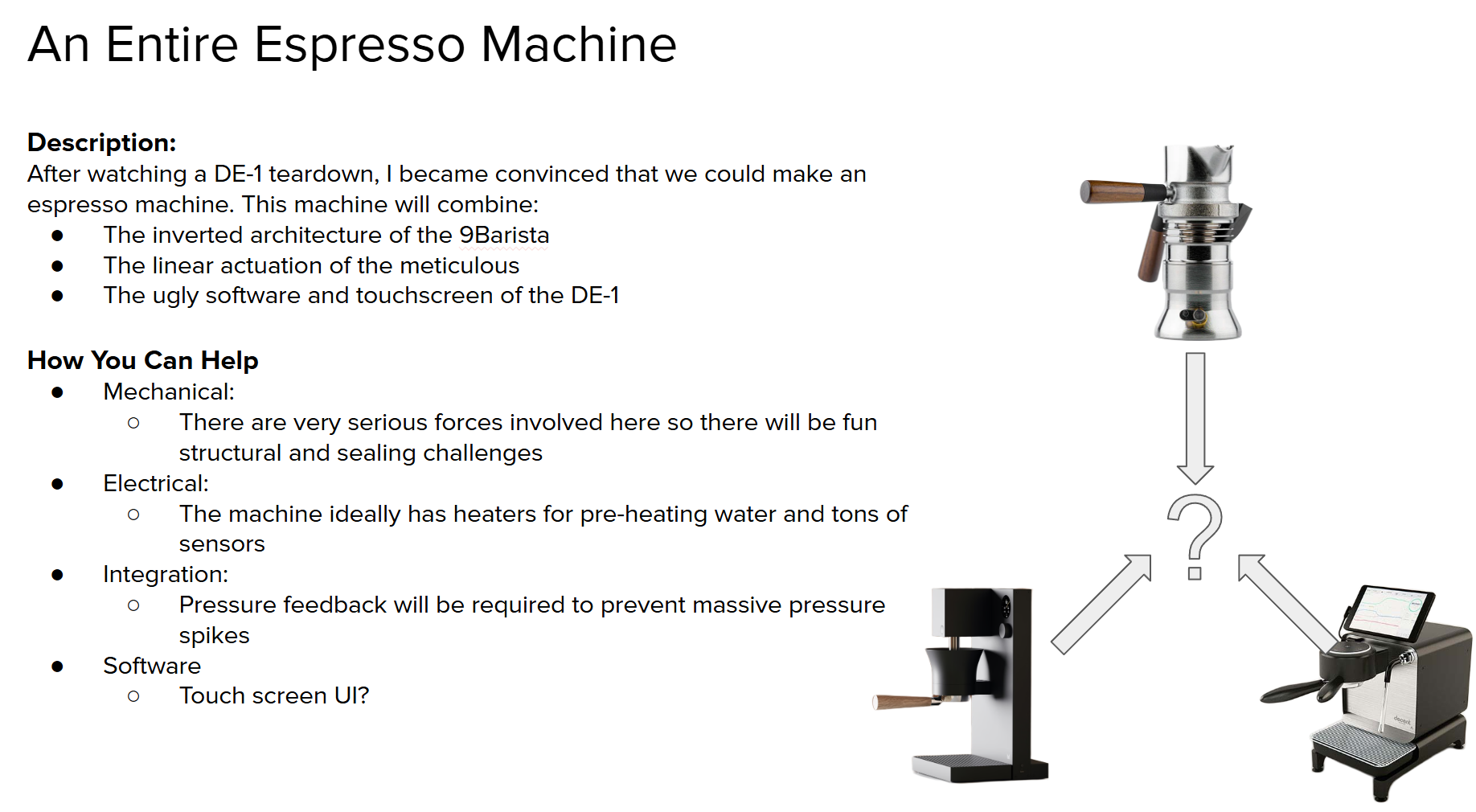
In early 2024, finding myself down a Youtube rabbit hole of espresso machine teardowns, I decided that despite the many flavors of espresso machines in existence, some of the most compelling design permutations had not been tried yet.
To me, there were three uniquely compelling products on the market:
The 9Barista: A gorgeous portable stovetop device that was uniquely compact and inverted the espresso making process pushing water up rather than down through a puck.
The Decent DE1: The original tech-forward consumer espresso machine, featuring flow-profiling, pressure-profiling, and volumetric dosing.
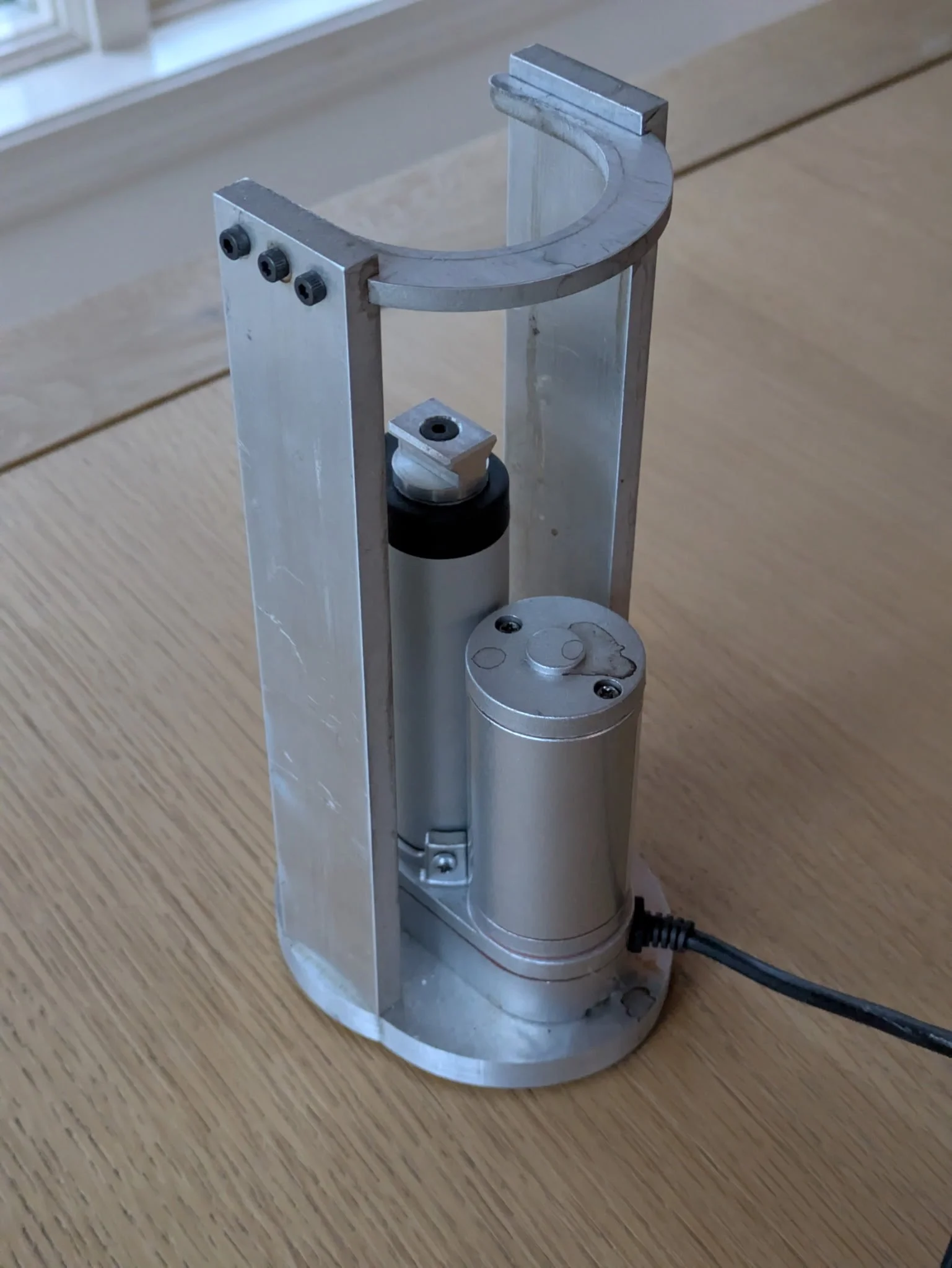
The Meticulous Espresso: A lever-style machine in spirit, where the lever has been replaced with a linear actuator.
I felt that there could be an interesting marriage of concepts from all three of the machines involving the inverted nature of the 9Barista, the linear actuation of the Meticulous, and the profiling capabilities of the Decent. And so, I threw this slide onto a hackathon pitch deck, managed to get a large team, and started designing.
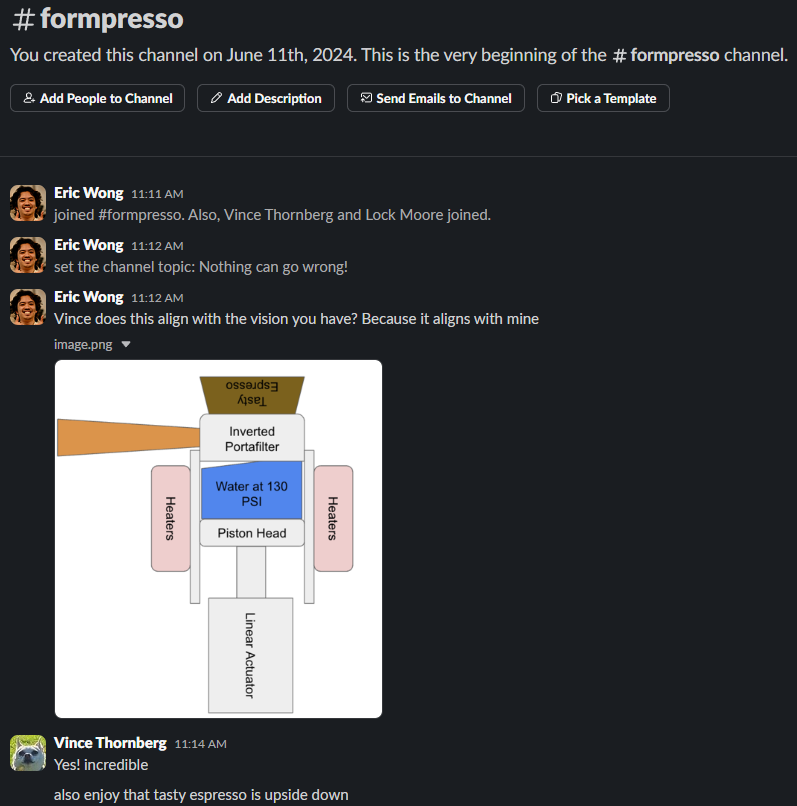
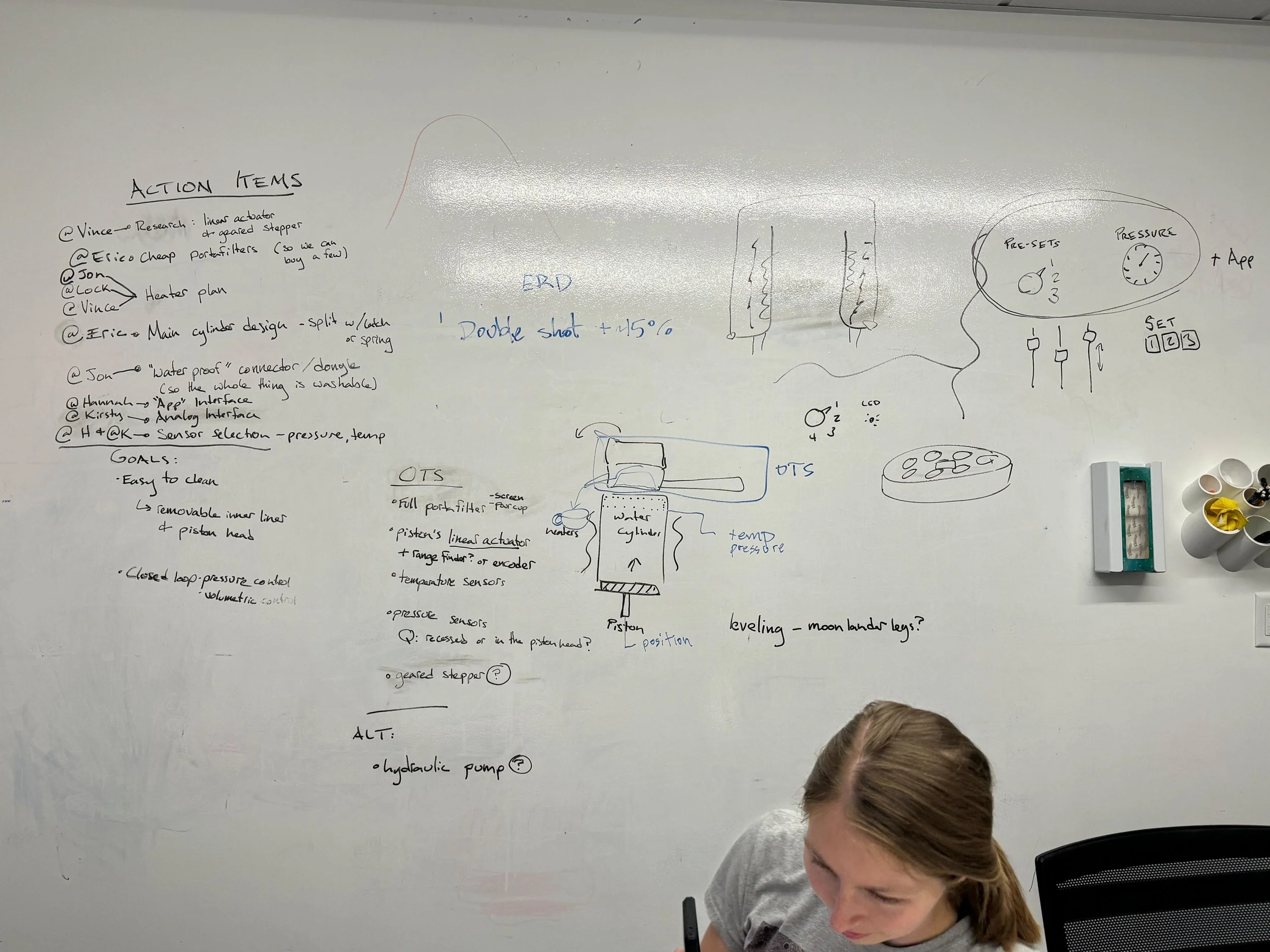
Early Architecture and Planning
Sometimes there are many decisions to debate and agree one, this project was not one of those cases. We knew what we wanted to make right from the start, and we were going to make it because it seemed cool.
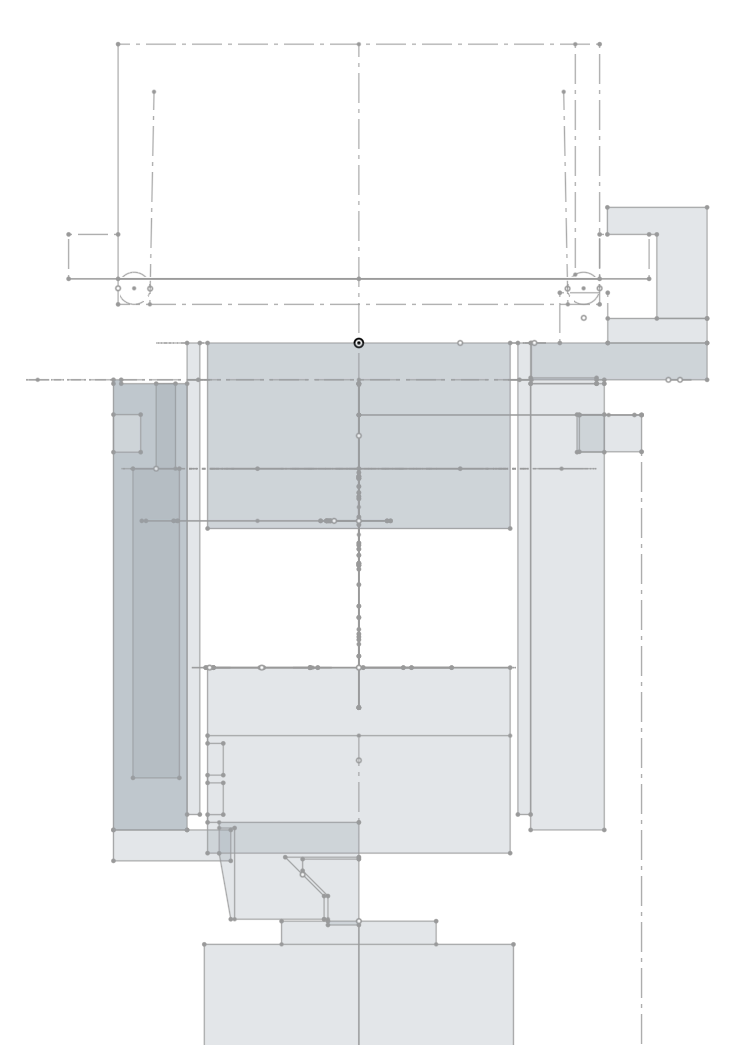
CAD
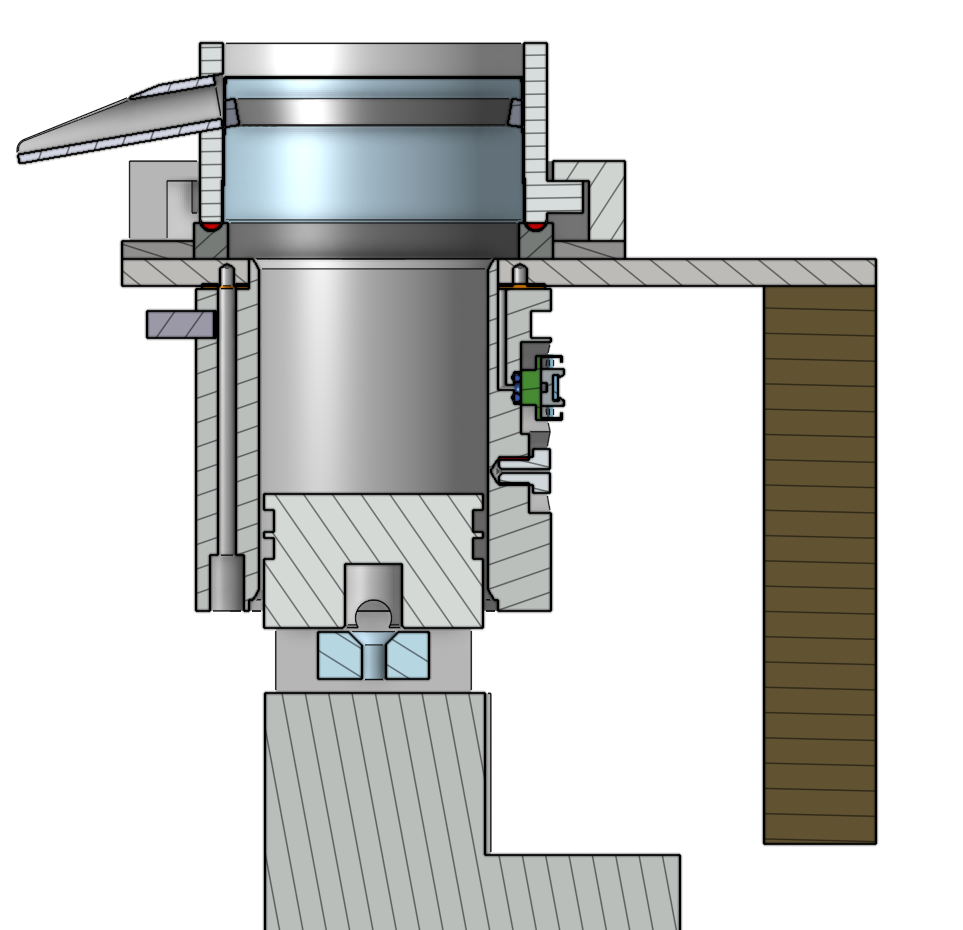
CAD was scrappy and quick on this project due to the time constraints of a hackathon. Ultimately though, only three things here were important:
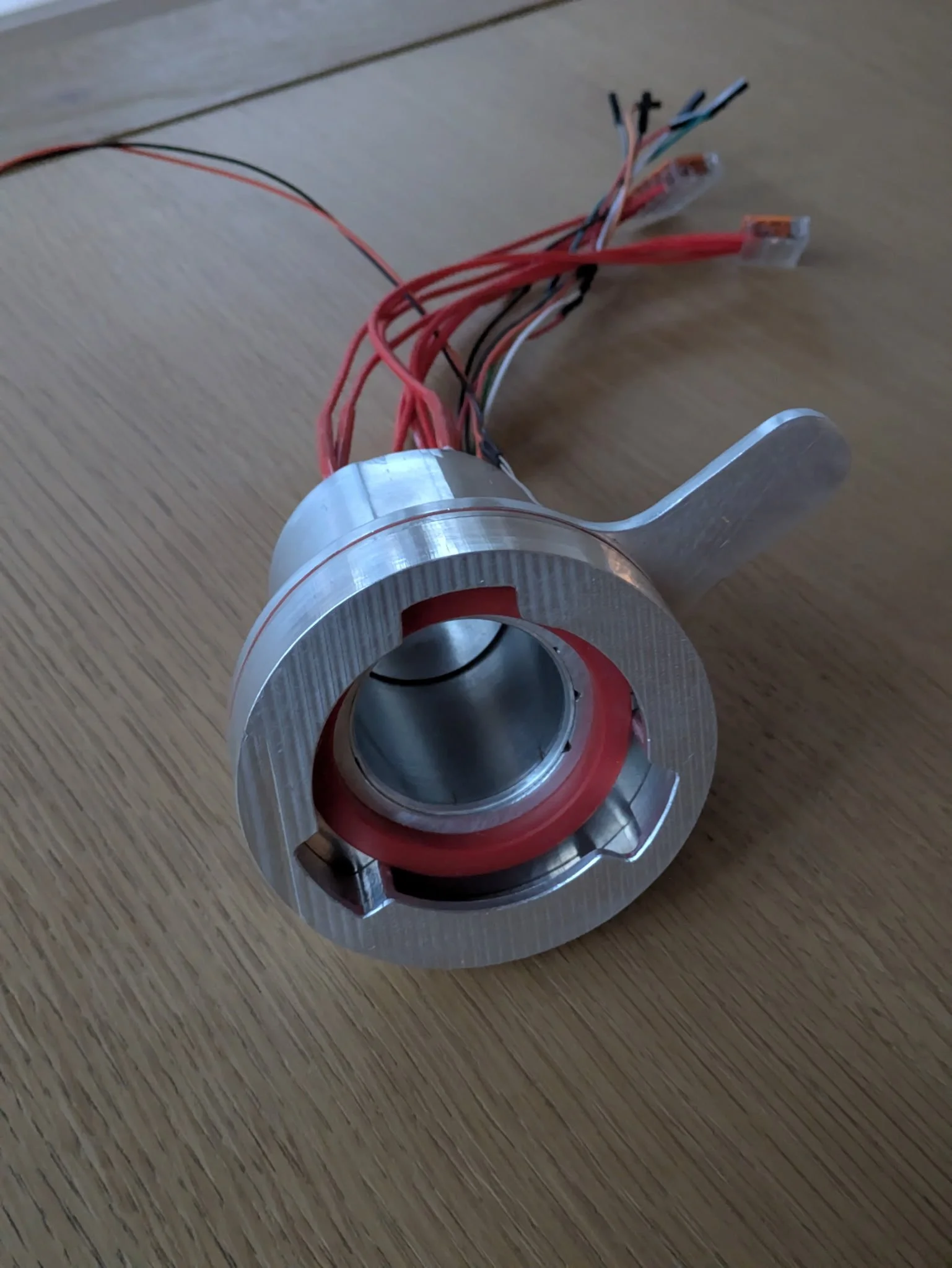
Make sure seals are designed properly to prevent a high pressure leak of hot water
This was accomplished using fully OTS seals and following the standard Parker O-Ring guidelines
Prevent build up of pressure beyond the designed value of 10 bar (~145 PSI)
We added an OTS overpressure valve for this
Make sure that the critical load path can support the approximate 3300 Newtons (~750 lbf) being applied between the actuator and the portafilter.
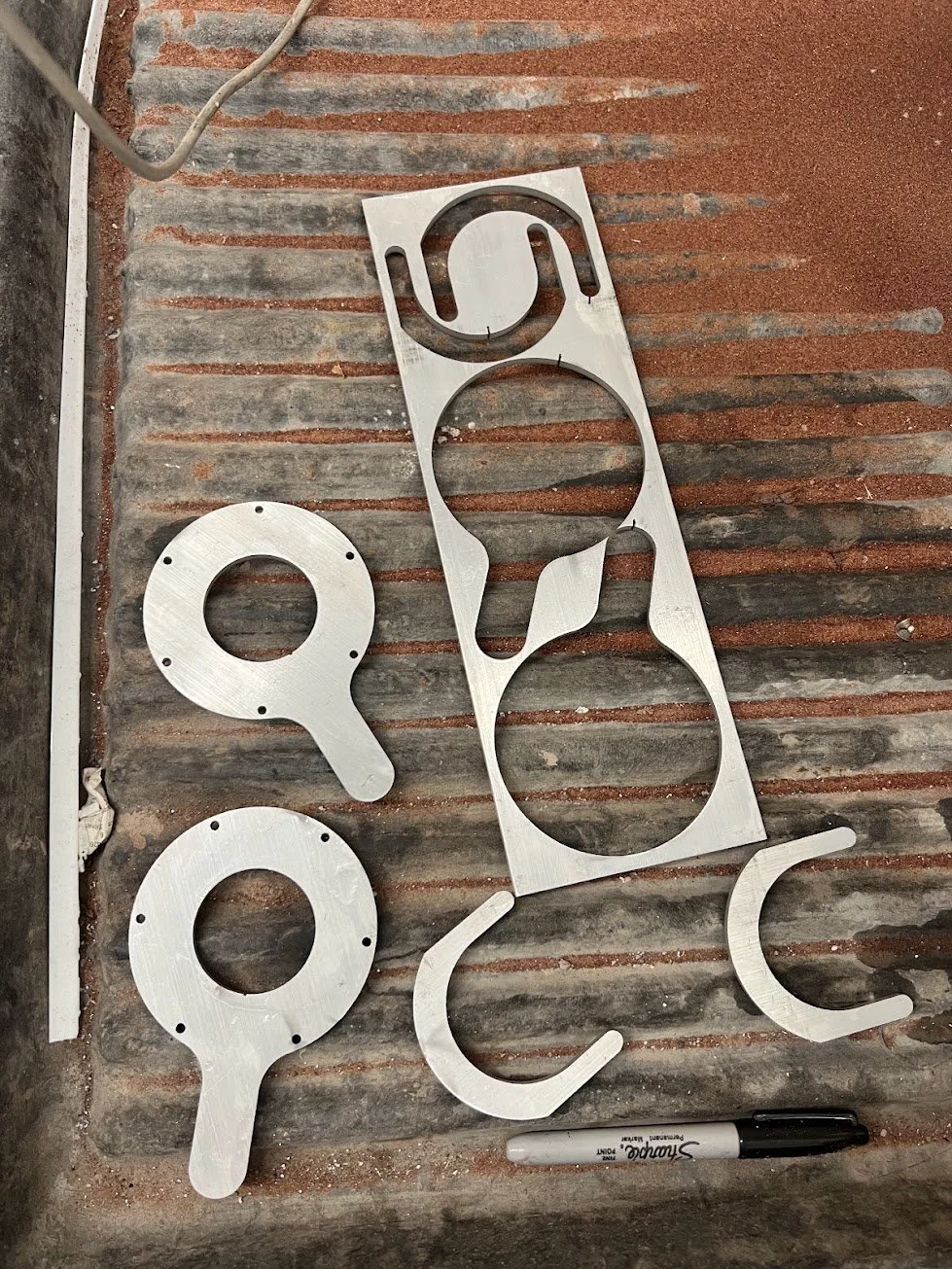
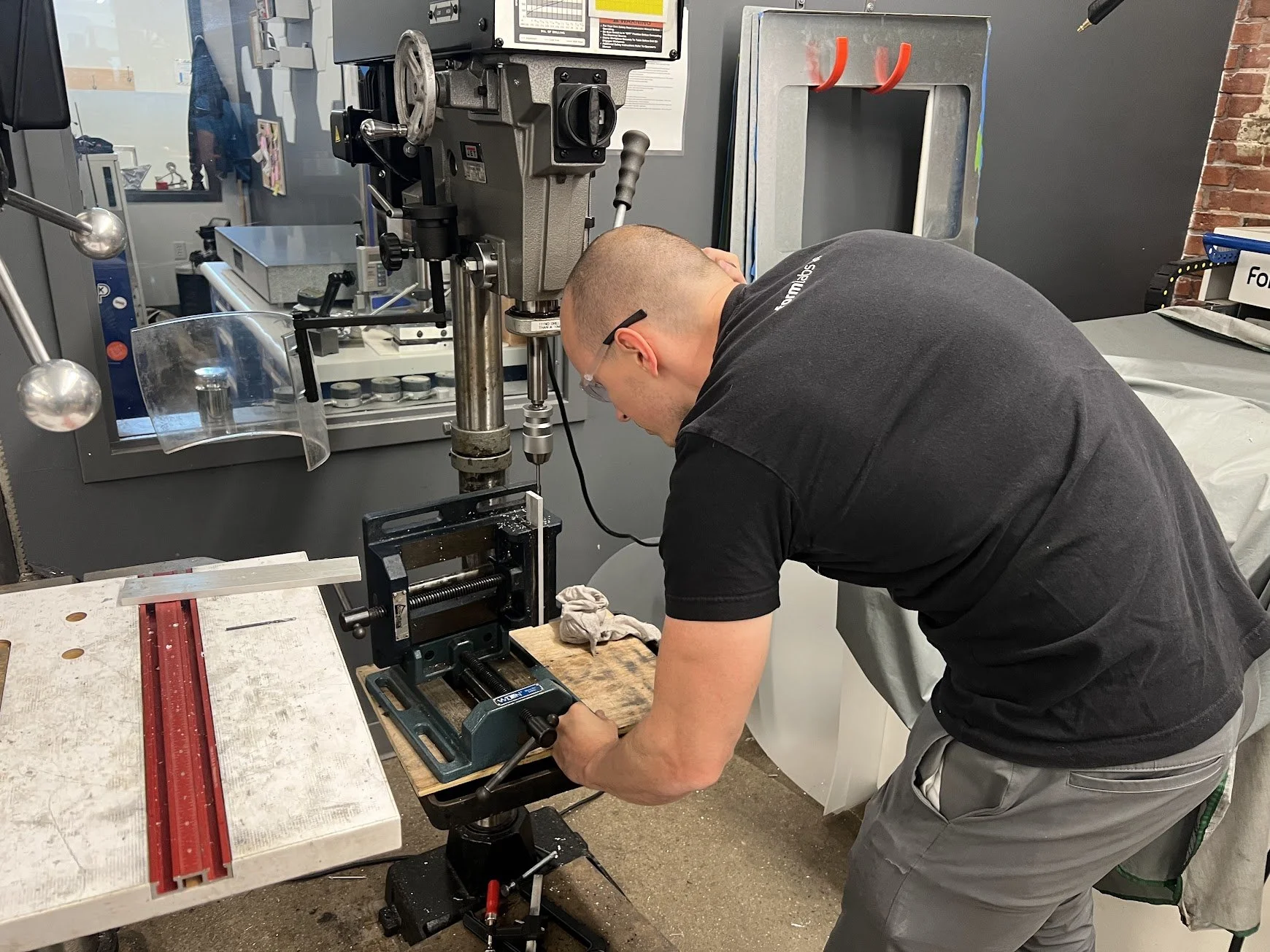
You may have noticed the incredibly thin base in the CAD. Don’t worry, this part was waterjet out of half inch Aluminum.
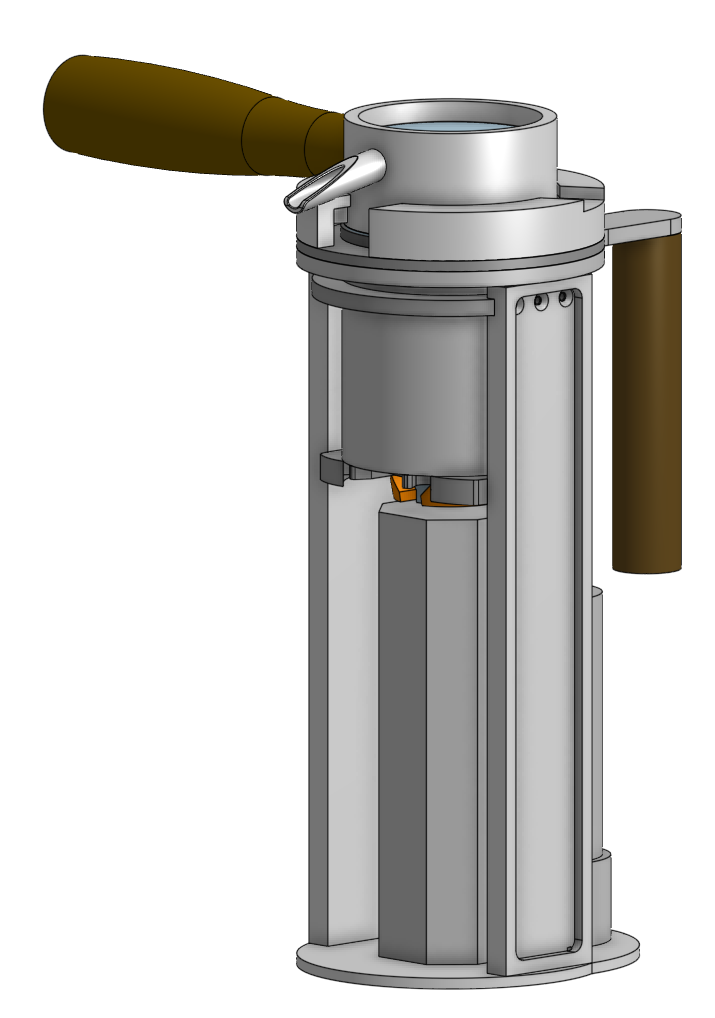
Let’s Make Espresso!
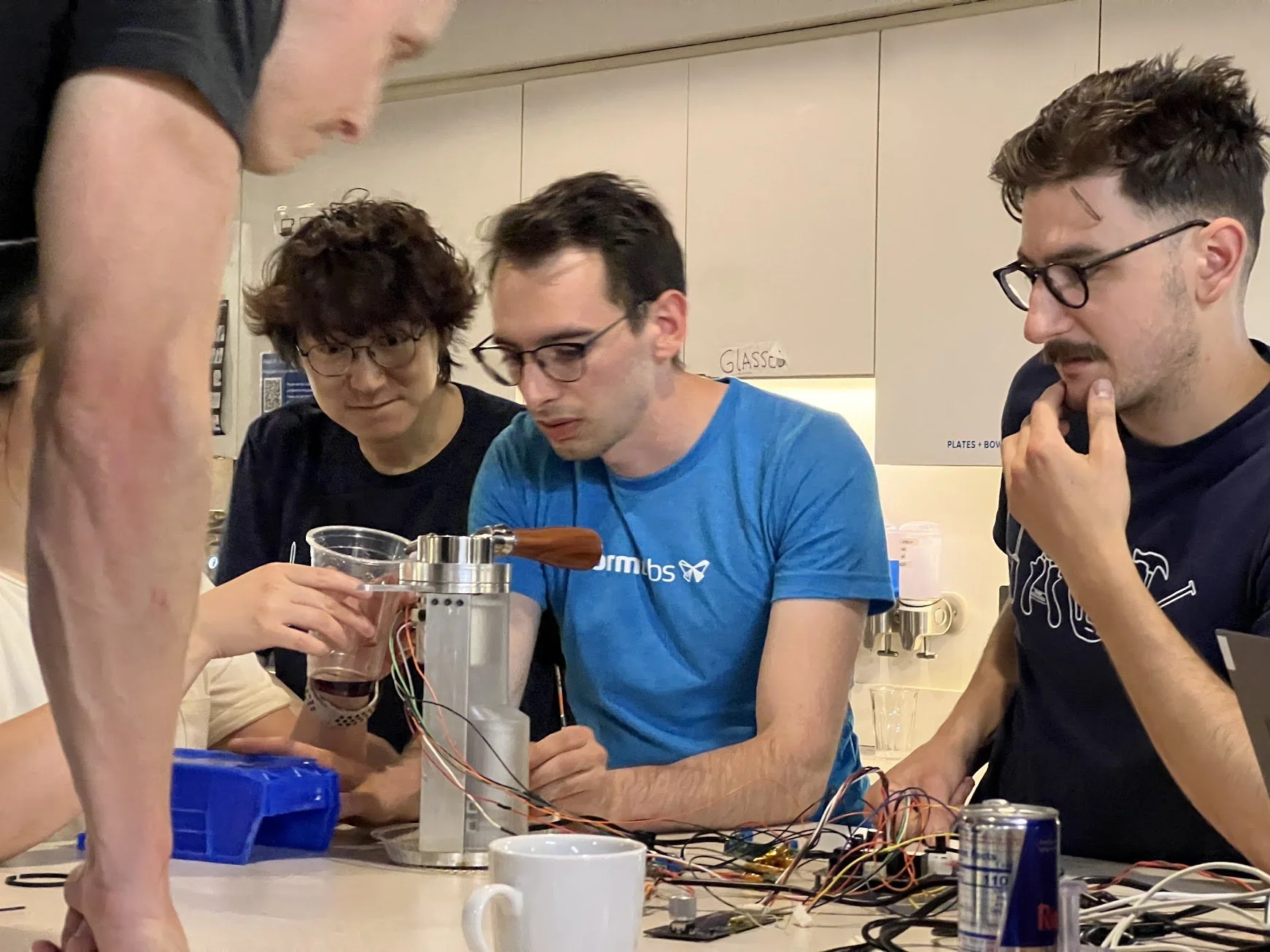
With the build complete, there was nothing left to do but see if the thing we had built could actually make espresso. Somehow, it did!
Note: The following videos have audio enabled and a lot of loud, excited yelling.
Tony finished a first pass on integrating the linear actuator that we harvested from a Form Auto
A large crowd gathered to watch our first test at hitting pressure using a blind basket. Lock doomed us all by talking about how nothing was leaking.
A first attempt at a run with hot water. Since hot water swells the coffee bed, this was also the first test where we began achieving pressure with coffee.
The first successful pressurized run with cold water.
True 9 bar heated espresso!
Mission Accomplished?
In the end, the high level goal of making a compact, heated, piston based, inverted espresso machine with pressure profiling was achieved.
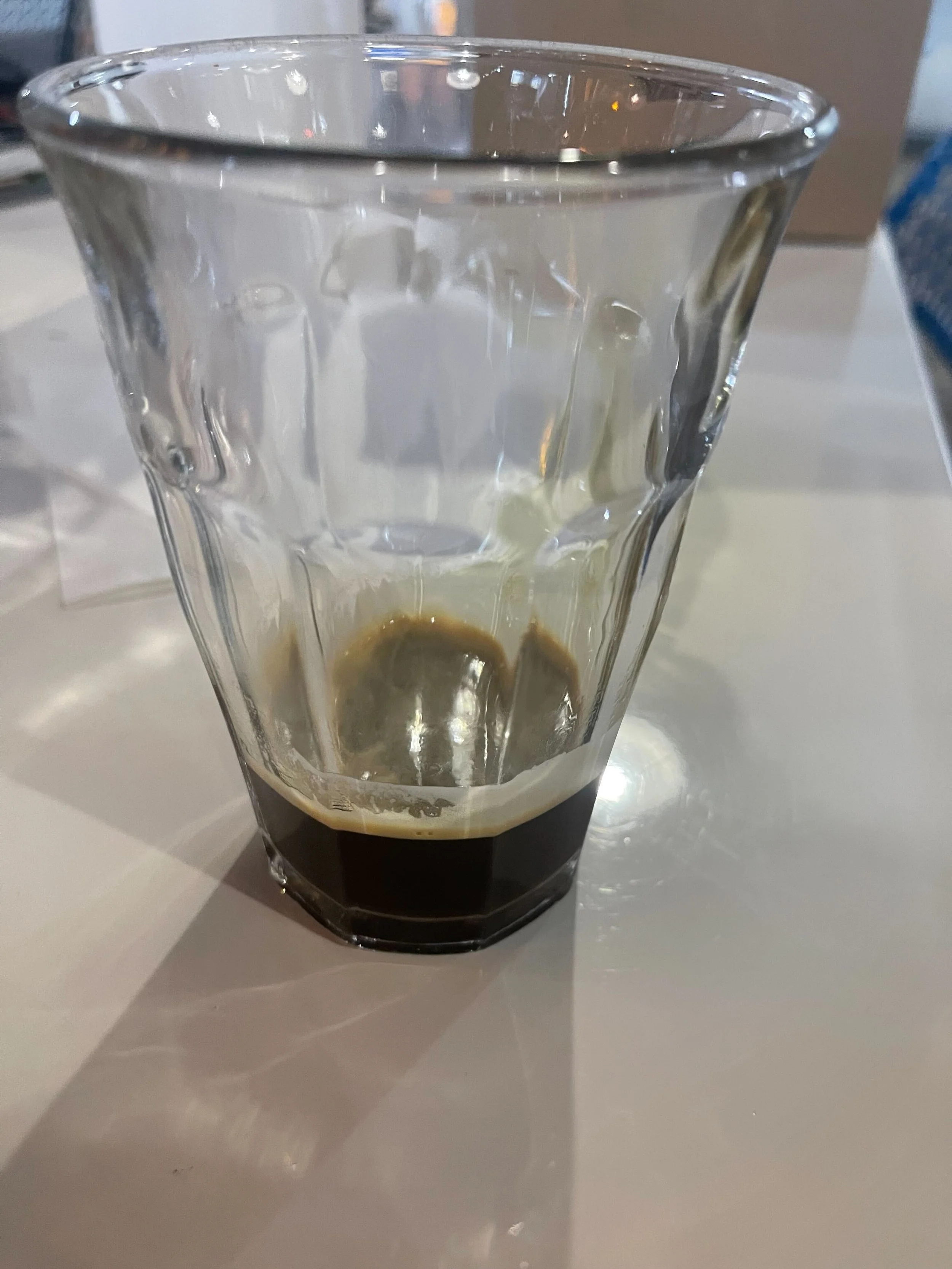
The espresso tasted… just fine. It did not stand out objectively, but of course it was a special shot since it was done using such a bizarre machine that I got to help design and build.
Ultimately, the machine did not see much extended use for a few reasons:
Although we initially planned to make the entire water path stainless steel, heat shrinking the aluminum heater around a SS tube proved incredibly difficult, so we quickly pivoted to an all-aluminum core. Although the science on heated aluminum and food safety appear muddy, there was enough “ick” factor there to hold off on making it an everyday machine.
Shots that experienced channeling had the hilarious but real consequence of blasting a stream of hot coffee off in a random direction. As we later found out, the 9Barista solves this by incorporating a roof above the majority of the portafilter
Thank you for reading about this project! Click here to return to my portfolio page.